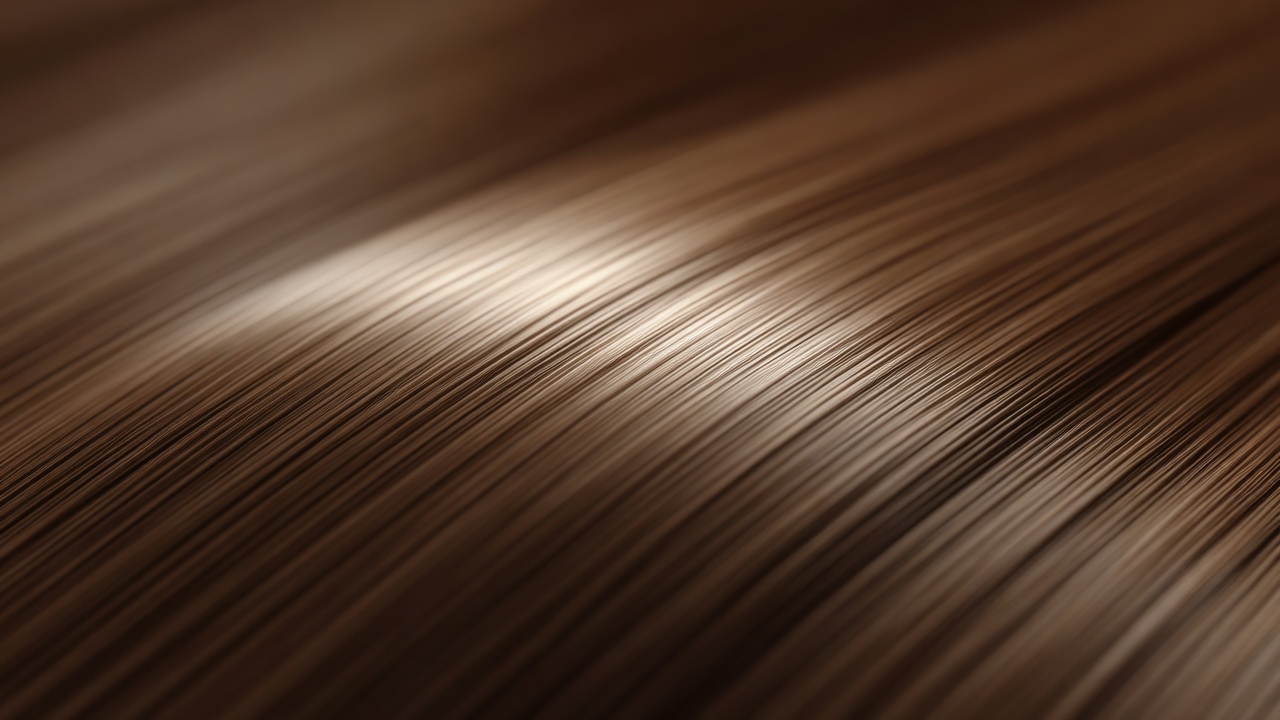
“Gloss” sounds like a single treatment, but salons and product brands use the word for several different services. Some are clear, some deposit tone and some use an oxidative colour system with a developer. Others behave more like a conditioning colour mask. Before booking, ask what product category the salon means, what change it is intended to make and whether it will alter the depth of your existing shade. The label alone cannot answer those questions.
Shine, tone and lightness are different
Shine describes reflected light. Smooth alignment, the condition of the surface, styling residue, the direction of the light and the camera angle all influence it. Tone describes the colour character, such as warm copper, soft beige or a more neutral brown. Lightness describes how dark or pale the hair appears. These can affect one another visually, but a shinier brunette has not necessarily become lighter. Comparing photographs under different lighting often exaggerates the apparent change.
A tinted gloss may make a warm transition look quieter, enrich faded copper or add a little depth to pale lengths. It may also reduce visible contrast if the lighter pieces take more pigment than expected. Clear gloss generally aims for a finish without intentionally adding a shade, although the full effect depends on the formulation and starting hair. Neither description should be treated as a promise that every product is non-damaging or suitable for every condition.
| Category | Common aim | Important limit |
|---|---|---|
| Clear gloss | Enhance the impression of shine and smoothness. | Does not replace lightening or remove established colour bands. |
| Tinted gloss or toner | Adjust colour character or refresh faded tone. | Deposit and longevity depend on the product and porosity. |
| Colour-depositing conditioner | Support a shade between suitable services. | May stain porous areas, hands or surfaces; follow directions. |
| Permanent colour service | Create a longer-lasting change within its capabilities. | Not interchangeable with a gloss; assessment and testing matter. |
Know what gloss cannot solve
A typical deposit-focused gloss is not a way to make dark artificial colour significantly lighter. A very uneven canvas, strong bands from old colour or substantial unwanted depth may need a separate corrective plan. Adding more tone can sometimes make a problem look darker rather than cleaner. If the hair already feels fragile, ask whether a conditioning-only appointment, a trim or a pause in chemical services would be more appropriate than another colour application.
Porosity influences how hair takes and releases pigment. Previously lightened ends may respond differently from newer growth, so the colourist may need different formulations or timing across the head. A strand test can help explore that response. Describe any previous direct dyes, henna, smoothing treatments or home colour. Even a product that has visually faded can matter. “Temporary” on the packaging does not guarantee that every pigment will leave every head of hair quickly.
Make a tonal decision in context
Bring a reference for the warmth you enjoy rather than asking only to remove “brassiness.” That word can mean orange, yellow, red or simply an unfamiliar warm reflection. Caramel warmth may be exactly what connects a deep root to lighter ends; removing too much of it may change the character you liked. Ask the colourist to explain the likely trade-off between a cooler appearance, brightness and visible depth. A slightly warmer result may better fit the available canvas.
Test your expectations against how you actually wear your hair. A sleek blow-dry may produce a broad, continuous reflection, while curls distribute highlights across many small curves. Curls and coils can be healthy without showing the same sheet-like shine as straight hair. Product accumulation can also affect appearance, but aggressive cleansing is not automatically the right response. Evaluate softness, manageability and breakage as well as glossiness, and avoid treating a photograph as a diagnostic test.
Plan the refresh, not a fixed expiry date
The persistence of a gloss varies with product chemistry, starting condition, wash frequency, heat, sun and swimming. A universal number of washes would be misleading. Ask what fading is expected to look like and whether a follow-up should be scheduled by time, appearance or condition. Do not automatically layer tinted home products over a fresh service. They can shift a carefully balanced tone or accumulate on the most porous sections.
Allergy alert testing should follow the product manufacturer’s instructions and the salon’s policy, even if the service sounds gentle. A strand test checks a different issue and does not replace allergy precautions. If a product causes burning, swelling or other concerning symptoms, stop exposure and seek appropriate medical advice; severe symptoms require urgent care. For everyday upkeep, use the recommended routine consistently rather than chasing reflection with repeated chemical changes.