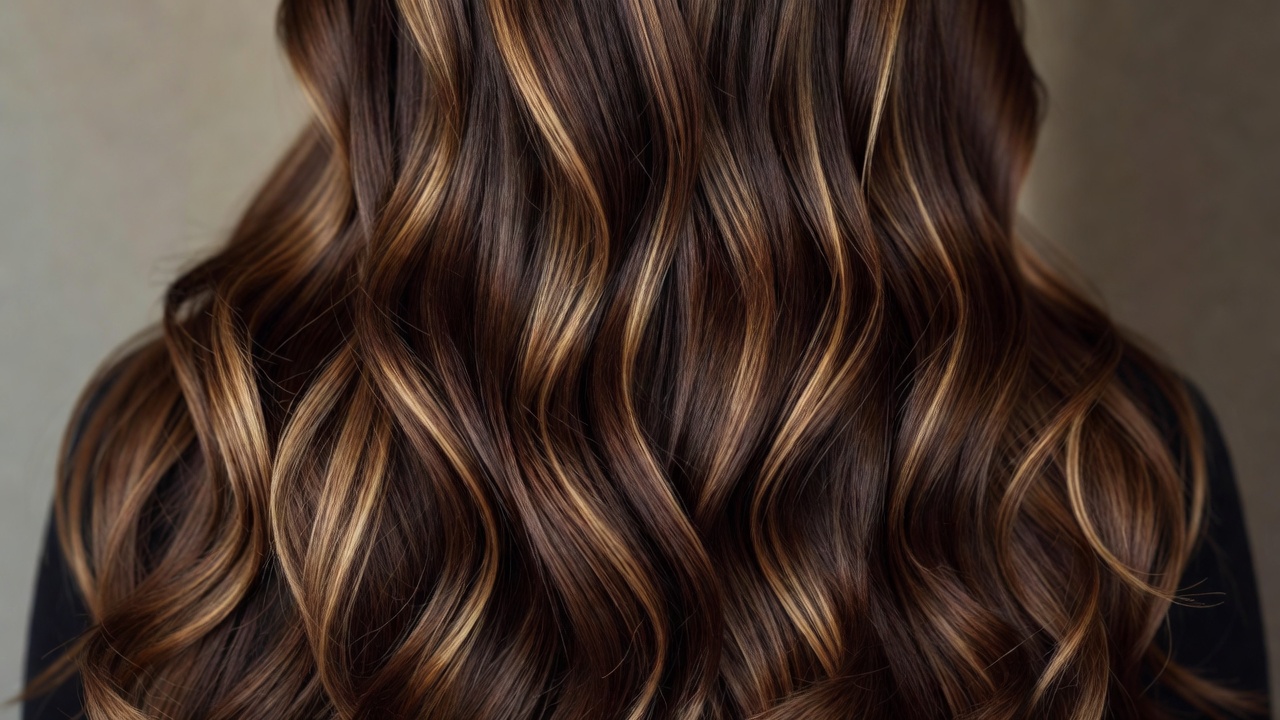
Begin by separating three decisions: how light you want to go, where that lightness should sit, and how warm or cool it should appear. They are related, but they are not interchangeable. A brunette can have pronounced dimension without becoming blonde, while an all-over pale shade can have relatively little contrast. Describing those decisions individually helps a colourist translate a mood into placement that suits your starting point.
Technique names describe methods
Balayage generally describes a sweeping, hand-painted application, not a guaranteed shade or a particular amount of lift. Traditional foil highlights isolate selected strands and can support precise placement and controlled lightening. Some services combine painting, foils, fine weaves and backcombing. “Foilyage” is salon shorthand rather than a universal technical specification. Ask what the proposed method is intended to achieve on your hair, instead of treating a trending name as a complete service order.
Fine highlights may create a closely blended effect, especially when their spacing is considered alongside the base colour. Wider ribbons can make contrast more visible, but their appearance changes with curl, density and styling. A face frame concentrates brightness near the front; it does not automatically mean the rest of the head is lightened. Discuss how it will look when your hair is tied back and whether the front sections are strong enough for the planned service.
Read the spaces between
Dimension needs darker areas as well as lighter ones. A root shadow introduces or reinforces depth near the scalp, while a root melt usually suggests a more extended, blended transition. Salons use these labels differently. Ask how far the darker colour will travel and whether it changes your natural base. Lowlights can restore depth to hair that has become uniformly light, although porous lengths may absorb colour unevenly and require a careful formulation.
These colours explain placement only. They are not salon level numbers, mixing instructions or achievable targets for every head of hair.
Choose a relationship between shades
Chocolate with caramel tends to keep a warm relationship between dark and light. Copper beside auburn can create a more closely related red family, while a beige ribbon against brown may appear quieter than a very pale, cool ribbon. These are descriptive combinations, not rules based on skin tone. Hold different references near your face in ordinary daylight and notice which relationship you enjoy. Consider jewellery, clothing and the makeup you actually wear rather than a rigid seasonal category.
Warmth often appears as darker hair is lightened because underlying pigment becomes visible. A tonal service can refine that warmth within the limits of the hair and product, but it cannot make every starting point equally pale. Very cool inspiration may require more lightening than the photograph suggests. Existing artificial colour, henna, progressive dyes or unknown products can complicate the plan. Tell the colourist about previous services even if the colour is no longer obvious.
Turn the image into a brief
Choose a few images for different reasons: one for root depth, another for the width of the lighter pieces, and one for the overall warmth. Include an image you dislike and explain the specific feature, such as a sharp line or very bright front sections. Bring a photograph of your own hair in natural light with minimal styling. Your usual parting, grey distribution and preference for wearing it up can all influence placement.
Ask what can be achieved in one appointment without compromising condition, and what might need a staged approach. A strand test can help assess response to a proposed service, but it does not guarantee identical behaviour everywhere. Allergy alert testing follows the product manufacturer’s instructions and the salon’s policy; a strand test is not a substitute. Leave the consultation with an agreed scope, an upkeep plan and permission to choose a gentler result if the hair needs it.
Judge the blend in more than one finish
Loose waves can conceal strong transitions, while straight styling may reveal them. Ask to see the placement in a finish close to your everyday routine. On curls, assess complete curl groups rather than individual strands alone. Revisit the plan after discussing the cut, because removing length or adding face-framing layers may change which pieces remain visible. Colour planning works best when shape, condition and maintenance are part of the same conversation.